



How Many Days Do You Need in Egypt?
It is the first question almost every traveller asks, and the honest answer is that it depends on what you came for. Egypt can be experienced in a long weekend or savoured across two unhurried weeks, and both can be wonderful. What matters is matching the length of your trip to the places you most want to stand in front of, so you leave feeling full rather than rushed.
The quick guide
- 4 to 5 days: Cairo, the Pyramids and a first taste of the Nile. Perfect for a focused first visit or a stopover.
- 7 to 8 days: The classic Egypt journey. Cairo plus a Nile cruise or a Luxor and Aswan combination. This is the length most travellers are happiest with.
- 10 to 12 days: The complete picture. Everything above, plus Abu Simbel, Alexandria or a few days on the Red Sea.
- 14 days or more: Egypt at its most generous, with time for the oases, the deserts and the sites most itineraries skip.
Four to five days: the essentials
A short trip to Egypt is still a serious trip. In four or five days you can stand before the Pyramids of Giza and the Great Sphinx, lose yourself in the Grand Egyptian Museum, walk the mosques and markets of historic Cairo, and still find a day for a first glimpse of the Nile. It is fast, but with good planning and a private guide it never feels thin. This is the ideal length if Egypt is one stop on a wider journey, or if you want a decisive first impression before returning for more.
Seven to eight days: the classic journey
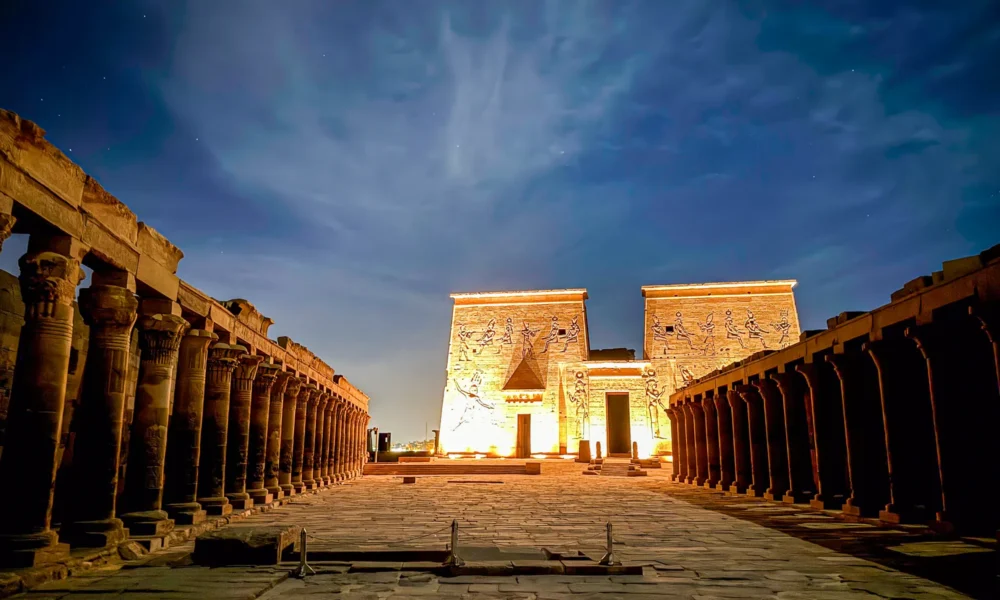
If there is a perfect length for a first full visit, this is it. A week gives you Cairo and Giza without rushing, then carries you south to the temples of the Nile. Many travellers split the time between Cairo and a Nile cruise between Luxor and Aswan, where the great sites unfold one after another, Karnak, the Valley of the Kings, Edfu, Kom Ombo and Philae, with the river carrying you gently between them.
Our flagship Golden Trail is built around exactly this rhythm, an eight day journey that connects Cairo, Aswan, Abu Simbel and Luxor by air and river so that no day is lost to long road transfers. It is the itinerary we recommend most often, because it sees the headline Egypt without ever feeling breathless.
Ten to twelve days: the complete picture
Give Egypt a little more time and the country opens up beautifully. Ten to twelve days lets you add Abu Simbel in the deep south, the Mediterranean elegance of Alexandria, or a restful stretch on the Red Sea to balance the temples with the sea. This is the length for travellers who want to see the icons and then exhale, trading a packed schedule for space to absorb what they have seen.
Two weeks and beyond: the unhurried Egypt
With two weeks, nothing has to be left out. You can follow the full sweep of the Nile, spend proper time in Cairo and Alexandria, venture to Abu Simbel, and still carve out days for the Western Desert oases or the diving and snorkelling of the Red Sea coast. A trip this length is less about ticking sites and more about rhythm, the slow pleasure of a country that rewards patience.
A week in Egypt, roughly day by day
To make the classic journey concrete, here is how a well paced eight days often flows. The first two days belong to Cairo and Giza, the Pyramids and the Great Sphinx, the Grand Egyptian Museum and the old heart of the city. Then a short flight carries you south, where the temples of the Nile begin. Many travellers spend the following days moving gently between Aswan and Luxor, taking in Philae, the High Dam, Abu Simbel for those who wish, then Kom Ombo and Edfu along the river, and finally Karnak, the Valley of the Kings and the temple of Hatshepsut around Luxor.
The exact order varies with flights and cruise schedules, but the principle holds, a day or two in the north, then an unhurried sweep through the south. Our Golden Trail follows this shape closely, and it is the itinerary we hand to travellers who want to see the essential Egypt in a single, graceful week.
Where travellers choose to add time
When people extend a trip, three additions come up most often. Abu Simbel, deep in the south, rewards the effort with some of the most awe inspiring temples in the country. Alexandria, on the Mediterranean, offers a completely different Egypt of sea breezes, Greco Roman history and faded cosmopolitan charm. And the Red Sea coast, around Hurghada, provides warm water, coral reefs and the kind of restful days that balance a temple heavy itinerary beautifully. Any one of these turns a complete trip into a memorable one.
How to decide
Start with the non negotiables. Almost everyone wants the Pyramids and the Egyptian antiquities in Cairo. Most also want the temples of the south, which means Luxor and Aswan and ideally a cruise between them. Once those are in, each extra ambition, Abu Simbel, Alexandria, the Red Sea, the desert, adds roughly a day or two. Add them up, then add a little breathing room, because the single most common regret we hear is not that a trip was too long, but that it was too tightly packed.
A note on pace
Egypt is a large country and its treasures are spread from the Mediterranean to the Sudanese border. The secret to a trip that feels longer than it is lies in smart logistics, short internal flights instead of long drives, mornings timed to beat the heat and the crowds, and a guide who knows when to linger and when to move on. That is the difference between seeing Egypt and feeling it.
Whatever length suits you, our multi-day journeys are built to make every day count, and our single day tours let you add exactly the experiences you do not want to miss.

Egypt rewards travellers all year round, but the season you choose shapes everything from how you feel at midday to.
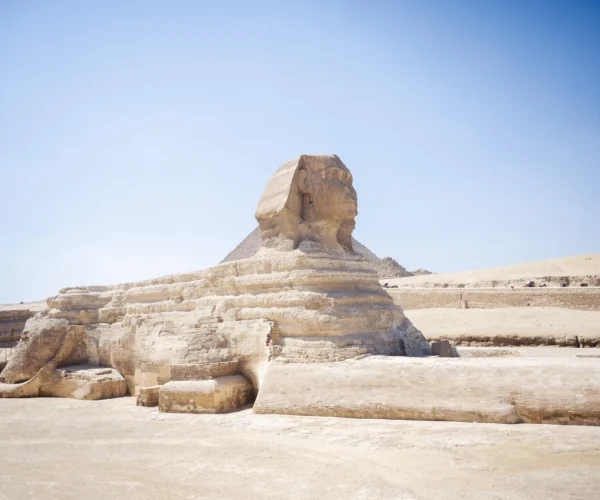
The last surviving wonder of the ancient world is more than a photograph. Here is how to visit the Pyramids.
Comment Section