


The Pyramids of Giza: A Complete Visitor’s Guide
There are few moments in travel quite like the first sight of the Pyramids of Giza. They are older than almost everything else humans have built and still standing, rising from the desert edge on the outskirts of Cairo with a presence no photograph prepares you for. Visiting them well, rather than simply visiting them, is what turns a famous view into a memory you keep for life.
What you are actually looking at
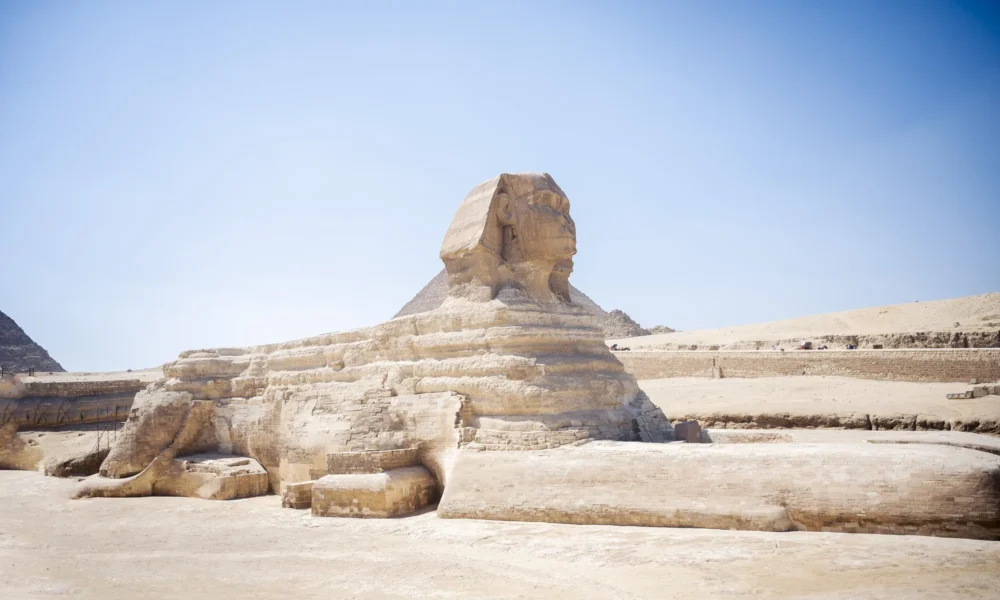
The Giza plateau holds three main pyramids. The Great Pyramid of Khufu, built around 4,500 years ago, is the largest and the only surviving wonder of the ancient world. Beside it stand the pyramid of Khafre, which looks taller because it sits on higher ground and still wears a cap of its original smooth casing, and the smaller pyramid of Menkaure. Guarding them is the Great Sphinx, a lion bodied figure with a human face, carved from a single ridge of limestone.
Together they formed vast funerary complexes, with temples, causeways and smaller tombs for queens and nobles. Understanding that you are standing in a sacred landscape, not just beside three monuments, is what a good guide brings to the plateau.
When to go
Arrive early. The site opens in the morning, and the first hours offer softer light, cooler air and far fewer people. Midday brings heat and crowds in equal measure, while late afternoon rewards you with long golden light that photographers love. If you can, aim for an early morning visit and let the day unfold from there.
The cooler months from October to April are the most comfortable, though with an early start the Pyramids are rewarding year round. In summer, the newly opened Grand Egyptian Museum nearby offers a cool, magnificent refuge for the hottest part of the day.
Can you go inside
Yes. You can enter the Great Pyramid and the other two for an additional ticket, climbing a steep, narrow passage into the heart of the structure. The chambers themselves are bare, the treasures long since moved, and the passage is cramped and warm, so it is not for everyone. For many travellers the experience of being inside a structure this ancient is unforgettable. For those with claustrophobia or limited mobility, the exterior alone is extraordinary.
The Grand Egyptian Museum
No visit to Giza is now complete without the Grand Egyptian Museum, which sits within sight of the plateau. It is one of the largest archaeological museums in the world, and it is home, for the first time in one place, to the complete treasures of Tutankhamun, the famous golden mask among them. Pairing the Pyramids with the museum in a single area gives you both the monuments and the masterpieces they protected, and it is one of the most rewarding days in all of Egypt.
Beyond the three pyramids
Most visitors photograph the big three and the Sphinx and leave it there, but the plateau holds more. Beside the Great Pyramid sits the Solar Boat Museum area, where a full sized cedar vessel, buried in pieces beside Khufu’s pyramid and painstakingly reconstructed, shows the craft the ancient Egyptians believed would carry the king across the sky. Scattered around the main monuments are the smaller queens’ pyramids, mastaba tombs of nobles, and the remains of temples and causeways that reveal just how carefully the whole complex was planned. A knowledgeable guide can show you these quieter corners, where you often have the history almost to yourself.
Getting there and the evening show
The Pyramids sit on the western edge of Cairo, close enough that the city almost reaches their feet, yet the moment you turn toward the desert the modern world falls away. A private transfer makes the journey simple, avoiding the guesswork of taxis and the heat of the midday approach. In the evening, the Sound and Light Show projects the story of the Pharaohs across the monuments under the night sky, a theatrical, slightly old fashioned spectacle that many travellers find a charming way to see the Pyramids a second time, lit and dramatic after dark.
A note on photographs
The classic panoramic viewpoint, where all three pyramids line up in a single frame, lies a short distance out into the desert and is reached easily on foot, by car or by camel. Early morning and late afternoon give the warm, directional light that makes the stone glow, while the harsh midday sun flattens everything. For the Sphinx, the area in front of its paws offers the famous eye to eye angle, and a guide will know exactly where to stand for the shot you have in mind.
How to see it well
- Go with a guide. The plateau is vast and the history is dense. A licensed Egyptologist turns piles of ancient stone into a story you can follow.
- Allow enough time. Rushing the Pyramids is a mistake. Give yourself space to walk, to take in the scale, and to reach the panoramic viewpoint where all three line up.
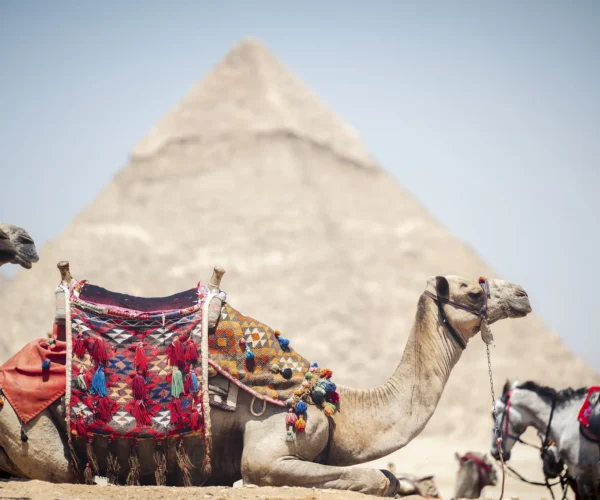
- Consider a camel or horse at the right moment. A short ride across the sand to the viewpoint is a classic experience, best arranged through your guide so the price and the welfare of the animals are both looked after.
- Bring sun protection and water. There is little shade on the plateau, so a hat, sunglasses and sunscreen make a real difference.
A few practical notes
The site is dusty and uneven, so comfortable shoes matter. Vendors on the plateau can be persistent, and the easiest approach is a polite, friendly no, which a guide helps manage so you can focus on the monuments. Entry tickets for the site and separate tickets for the interiors are straightforward to arrange, and a private tour removes the queuing and the guesswork entirely.
Making it part of a bigger journey
The Pyramids are the natural beginning of almost any Egypt trip, and they pair perfectly with the rest of Cairo and with the temples of the south. You can experience Giza and the Grand Egyptian Museum as a focused single day tour, or as the opening chapter of a longer multi-day journey that carries you on to Luxor, Aswan and the Nile. However you choose to see them, let a guide who knows the plateau intimately show you not just the view, but the world behind it.
Egypt rewards travellers all year round, but the season you choose shapes everything from how you feel at midday to.
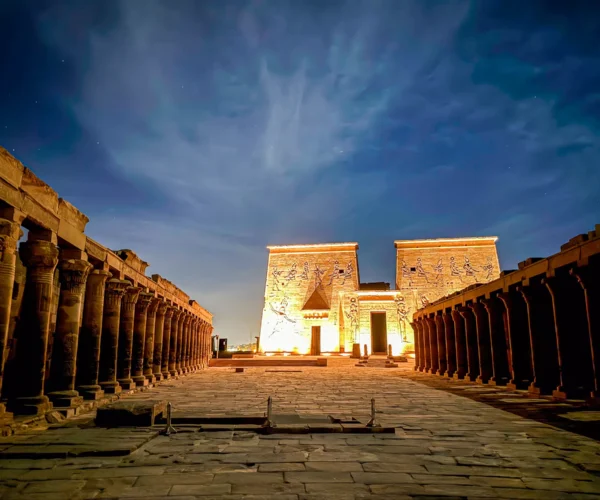
Five days, ten days, two weeks? The right length for an Egypt trip depends on what you want to see.
Comment Section